STYC HISTORY
Want this page to have more information? Volunteer to be our club historian!
A yacht club launched in a tavern? SureBy STYC member Deborah Bach on February 1st, 2009 www.threesheetsnw.com
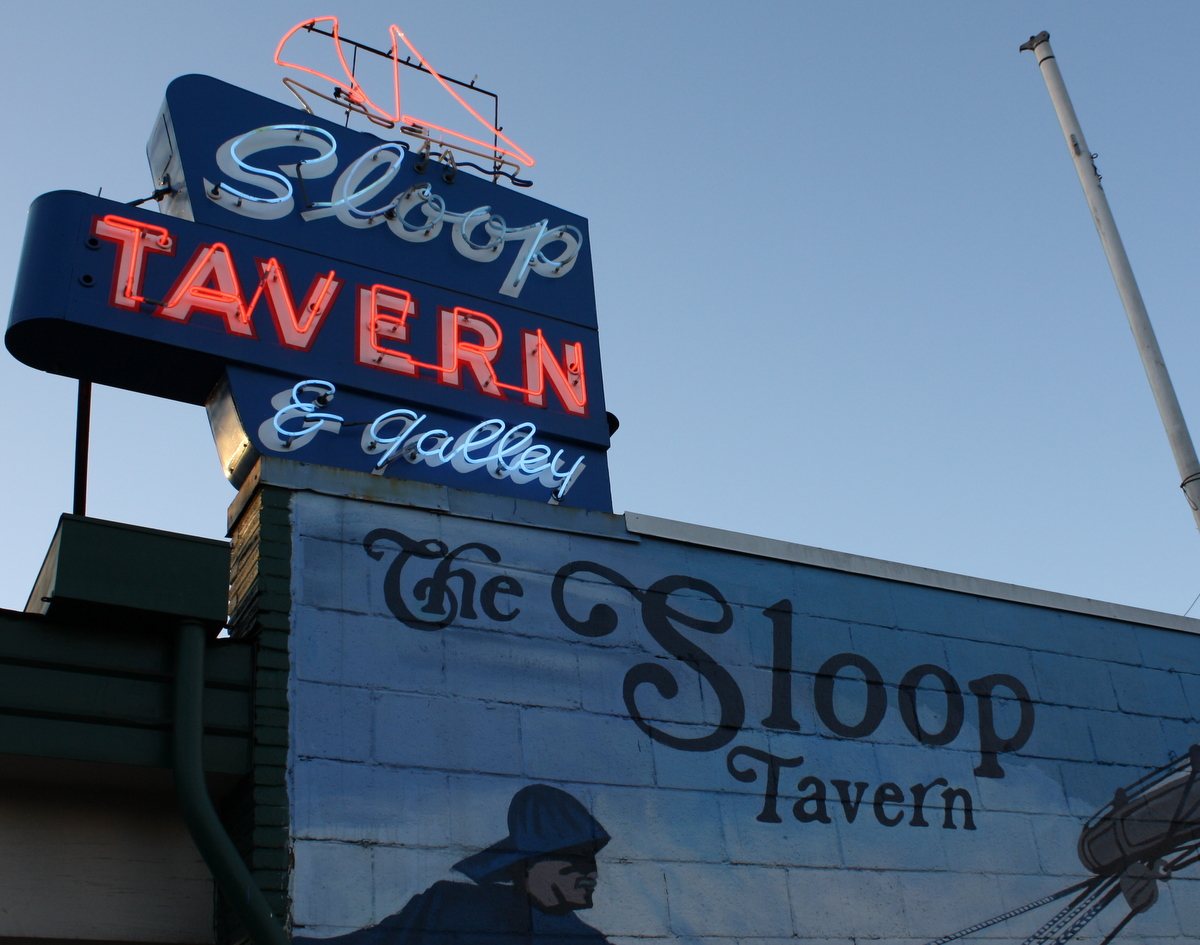
This isn’t your ascot-wearing, martini-sipping yacht club. Far from it. This is a yacht club launched by a man without a boat, in his tavern, in the hope of cultivating a more respectable clientele than the barflies who would show up in the morning at opening time. But despite its rather dubious beginnings, the Sloop Tavern Yacht Club is going strong 30 years later, one of Seattle’s best kept secrets for sailors who are in it purely for the love of the sport. “I’d say the club is for people who sail, not for people who want to act like they sail,” said Nate Creitz, 38, a STYC board member who is considered one of the top racers in the region. “Yacht clubs are kind of stuffy places. (The Sloop) is much more casual and a much more fun group of people.” The club’s genesis dates back to 1976, when Wayne Schmidt bought the Sloop Tavern, a slightly seedy watering hole not far from the Ballard locks. About half the bar’s regulars would show up early in the morning, and Schmidt began thinking about how to bring the clientele up a notch or two. A friend introduced Schmidt to a man named Pete Martinson, a sailor who raced out of the Corinthian Yacht Club down the road at Shilshole Bay. Martinson and his fellow racers were looking for an after-race hangout, so Schmidt began hosting happy hours at the Sloop after each race. He decided to sponsor a race, with the view of holding a laidback event for people who weren’t necessarily serious racers. To encourage a wide range of participants, the race organizers prohibited spinnakers and implemented a handicap system under which the slowest boats started first, enabling liveaboards with heavier boats to compete. The inaugural race drew 42 boats, more than Schmidt had expected, and left the participants wanting more. “We got a niche that nobody else was really serving,” said Schmidt, now 69. “It gave people a chance to learn how to race and they weren’t intimidated like they would be going and vying against all of the hot dogs on the Sound.” Schmidt was interested in sponsoring more races. But as the owner of a tavern where boaters liked to imbibe, he realized the potential liability issues. To avoid such problems, Schmidt started a nonprofit organization and christened it the Sloop Tavern Yacht Club, a name that appalled some members of tonier clubs. “There were people who thought we were a disgrace,” Schmidt recalled, chuckling. “On the other hand, we got a lot of support from a lot of members of the Seattle Yacht Club.”
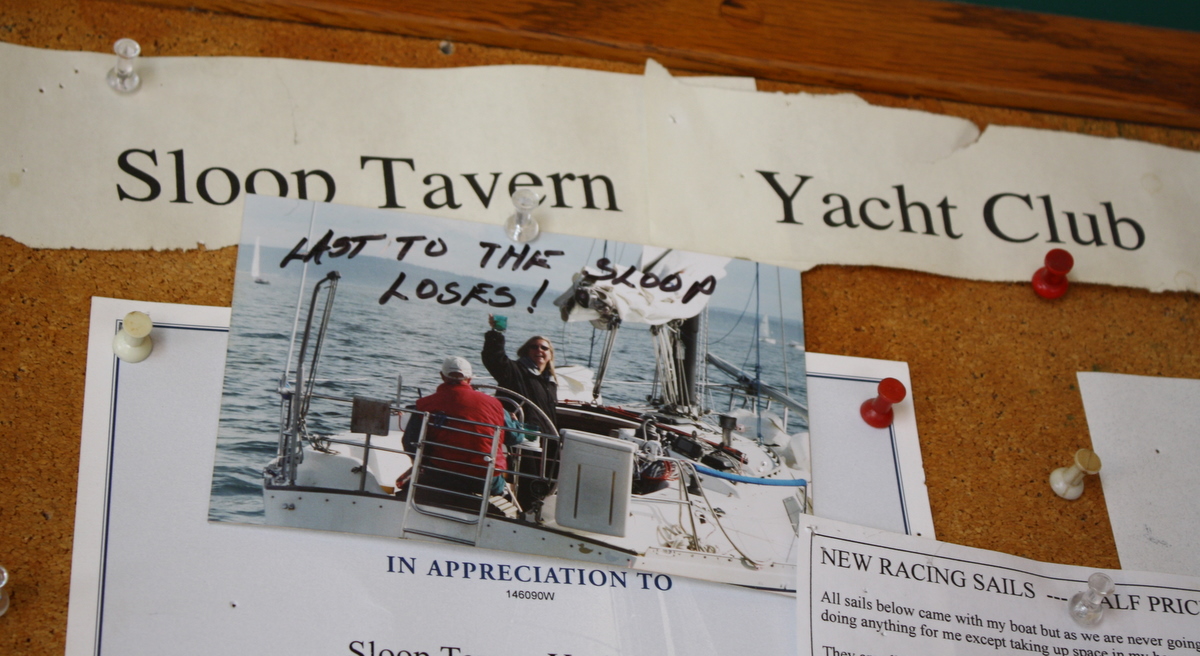
The first memberships sold for $3 annually. To qualify, members had to have a sailboat longer than 20 feet, with a galley and a head (a bucket would suffice). In the early days, the grand prize for races was a jug of wine that Schmidt found in the Sloop when he bought it. Too vile to serve to customers, the wine was instead passed around from winner to winner. Last-place racers had to fly the ”DFL flag” (Dead Fucking Last) for the weekend. “The whole concept of Sloop Tavern races was to make them fun,” Schmidt said. The club implemented “Jack and Jill” races so couples could compete together, and began holding overnight regattas. Boaters soon comprised almost all of the Sloop’s clientele. Over time the races drew more serious competitors, but club members say the STYC has managed to retain its irreverent character over the years. And though the Sloop’s clientele is now as likely to include 20-something hipsters and nearby workers as sailors, the tavern still functions as a de facto sailing club headquarters. A dusty case with glass doors holds club trophies and old framed photographs on the walls show former club members’ boats. Tacked up on a cork bulletin is the club’s official sign, two pieces of torn paper reading “Sloop Tavern” and “Yacht Club.” The club’s motto? “Everybody deserves another chance.” Former commodore Neil Bennett said the STYC’s existence as a “paper yacht club,” as opposed to a “brick and mortar” club with facilities such as a bar and clubhouse, has kept it both low-key and affordable. Fees are currently $125 for a new membership, $75 annually for voting members and $45 for non-voting members. Most races are free for members, who now number about 150. But Bennett said low cost isn’t the only reason people are attracted to the STYC, whose members range from tech executives to boatyard workers. The club is sanctioned by the Pacific International Yacht Association (PIYA), a racing standards organization. “We’re kind of the anti-establishment yacht club,” Bennett said. “There really is no demographic that describes Sloop members. The common thread is the passion for sailing.”
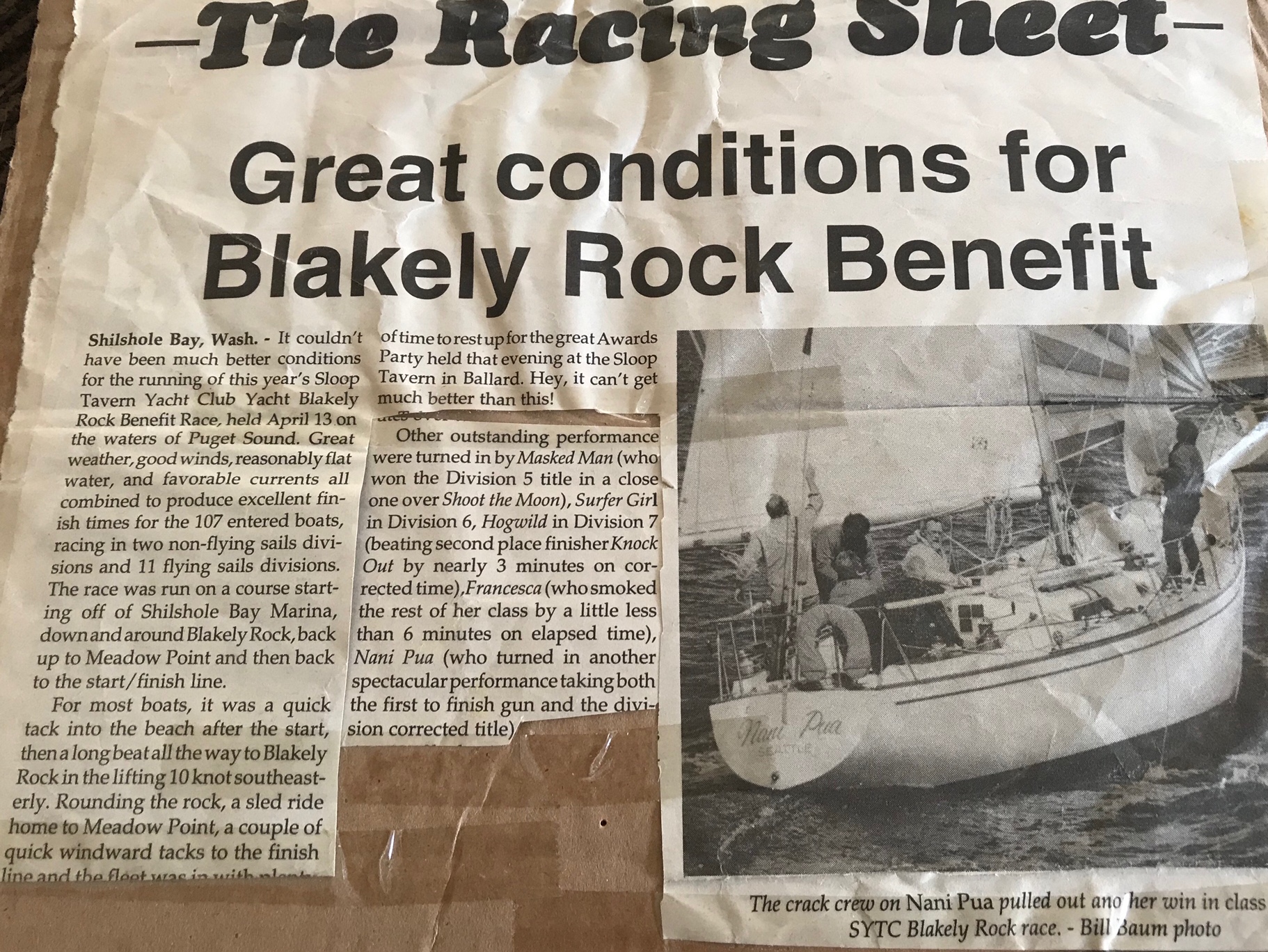
On a recent Sunday afternoon, Schmidt joined founding STYC members Patty and Pete Martinson at a table in the Sloop, which Schmidt sold in 1981. All are now landlubbers who have hung up their sailing gloves. Schmidt still gets together with his old boating buddies once in a while, but said instead of talk about boats, “we talk about our glaucoma or our sciatica.” The trio reminisced about the early days of the club, which Patty said managed to maintain a high level of competition but never take itself too seriously. “In this club, there was so much camaraderie and honesty and respect for everybody,” she said. “There was always a respect, a real deep respect.” The Sloop is much the same today, said board member Creitz. “Sailboat racing can be kind of cutthroat. People get very competitive and wound up about it,” he said. “The Sloop is about having a good time and enjoying yourself.” *Editor’s note: despite the Sloop Tavern Yacht Club’s obvious high standards, the author of this article is a member. Where Sailing is Fast, Fun, and Friendly!!!The STYC was founded more than 30 years ago by a group of live-aboard and free spirited sailors who wanted to create a yacht club the right way. From the club's inception over beers at the Sloop Tavern, the STYC has been a special place that has attracted sailors with a sense of fun and adventure.The club has always been a wonderful place for those new to sailing and new to racing that's why we've always had non-flying sails races (even though we now include spinnaker classes for some events). You can race with a much smaller crew single-handed in fact when rounding the weather mark just means easing the sheets. And . . . the club has always been home to some of the finest and most ferocious sailors on Puget Sound. Our members have won great honors in events ranging from the Duck Dodge to Tri-Island, to Whidbey Island Race Week, to Swiftsure, to Victoria-to-Maui, to TransPac, and Pacific Cup. Our members have always been sailors who love to cruise their part of the globe, often for years at a time. In addition, STYC supports the less fortunate with the annual Blakely Rock Benefit Regatta. Valued contributions from the Sailing Community are raffled off and the proceeds, along with the money received from the traditional breakfast and race entry fees, are donated to a local charity. From all this racing, from all this cruising, and from our wonderful sense of goodwill, good humor, and good seamanship, the Sloop Tavern Yacht Club has become endearingly known and respected in harbors great and small around the world. Grant Fjermedal Commodore 2000-2001 Benefits of JoiningWhen you join the STYC you get Membership in a recognized PIYA Yacht Club that allows you to race in sponsored events,Free Racing in all STYC Races (except Blakely Rock Benefit Regatta where there is a nominal donation) Opportunity to interact with fellow sailors STYC Burgee to fly proudly Reciprocal Moorage at several other Yacht Clubs Club Membership Directory and Bylaws and Membership Card Racing CruisingThe racing schedule is comprised of handicapped races in Puget Sound, offering competition in flying and non-flying sail classes. We start in February with the Iceberg Regatta.Our other popular races include the Ballard Cup Series, formerly the Six Pak Series, in which we have joined with Shilshole Bay Yacht Club to provide a series of ten races on Monday nights during the Summer. We sponsor one of the five races in the Jack & Jill Race Series for male/female couples, and the STYC Single-hand Race for solo sailors. Two or more times a year, our members get together for informal cruises on the pretext of a race and enjoy a potluck dinner and the company of other sailors at a predetermined location in beautiful Puget Sound. In April we sponsor the Blakely Rock Benefit Regatta, our annual fund-raiser for the community. The day starts with a benefit breakfast, then we race around Blakely Rock, and end up at the Sloop Tavern in Ballard, where items generously provided by supporting businesses are raffled off to support the designated charity for the year. The DetailsVoting Membership is open to anyone with equal ownership in a qualified cruising boat of not less than 20'.Associate Membership is available to those who do not meet the boat ownership criteria. STYC is an affiliate of Pacific International Yachting Association (PIYA) which is the local "arm" of US Sailing. Although our members are not required to join PHRF, we strongly encourage PHRF membership as part of our support for local sailing. PHRF membership is required for participation in most organized racing sponsored by other yacht clubs. We have two general meetings a year, one with a dinner in the fall, as well as a year end party where the next year's Board Members are elected. To join STYC, there is a $50 one time initiation and a $75 annual membership fee for Voting Members or $45 for Associate Members. TestimonialsHear how STYC members feel about the club:I enjoy the club because its membership is made up of relaxed racers. This club is substance, not fluff. No fancy club house, no social schedule. We actually get out to race and cruise! I do a lot of cruising and, with reciprocal moorage, I figure my benefits exceed dues by $150 a year or so. Even though we race pretty intensely, we like the Sloop's lower key approach. I see our main mission as a place where people can come with friends and family to race we don't feel like we have to have 5 America's Cup sailors on our boat to do well. |

2011 - 2012 Commodore Words 2009 - 2010 Commodore Words Mary Roberts, sister of Dick Roberts and dear friend of STYC passed away on Wednesday morning, August 11, after battling leukemia and a series of strokes since May. Mary was an active member of STYC for many years. She served as Treasurer and helped out with RC duty, club mailings, benefit regatta support, and many other club activities. Mary was an incredible lady and STYC will remember her always.Blue Lightning Cruise to MexicoDry Sailing from Coast to CoastSloop Tavern Boats in 48 North's Top 25 Boats of 2008 2nd Ben Braden More Uff Da 6th Patrick Denney Here and Now 7th Dan Randolph Runner 10th Ken Chin Kowloon 15th Nate Creitz Three Ring Circus 18th Mike Schiltz Money Shot 20th Scott Burbank Rock On 2008 Commodore Words Sloop Tavern Boats in 48 North's Top 25 Boats of 2007 7th Nate Creitz's Three Ring Circus 11th Bill Stange's Tuesday 18th Stuart Farrell's Tryst 22th Arne Hammer's Norn 2007 Commodore Words The Thanksgiving Snooze and Cruise ended up being a huge success. In attendance was Blues Power, Whiskey Run, Kowloon, Spice, Kirk Utters Boat (I don't know its name) and our guest Thumper. After finding out that Kingston Marina was reserved the group ended up spending Friday and Saturday night in Poulsbo enjoying the marina, shops and local bars to watch the weekends football games. The real excitement started late Saturday night when the seasons low tides had many of the sailboats in the marina out of the water or leaning on the docks, Whiskey Run included. But in true Sloop fashion we just went to the bar and waited for the water to float our boats again before we hit the bunks. Perfect weather and a truly fun group. Over the weekend we all talked about the confusion on getting a last minute cruise together via second hand sources. We decided we needed an email group that people could opt-in to and have the ability to email everyone about what's going on, or questions they may have. So, here it is below, the Sloop Tavern Yacht Club Sailors yahoo email group. Please send this out and invite anyone to become a member and enjoy hanging out with the STYC sailors out on the water. Just click on this link below and join the group! http://groups.yahoo.com/group/sloopsailors/ 2007 Foul Weather Bluff Nate brings home the hardware again!!! 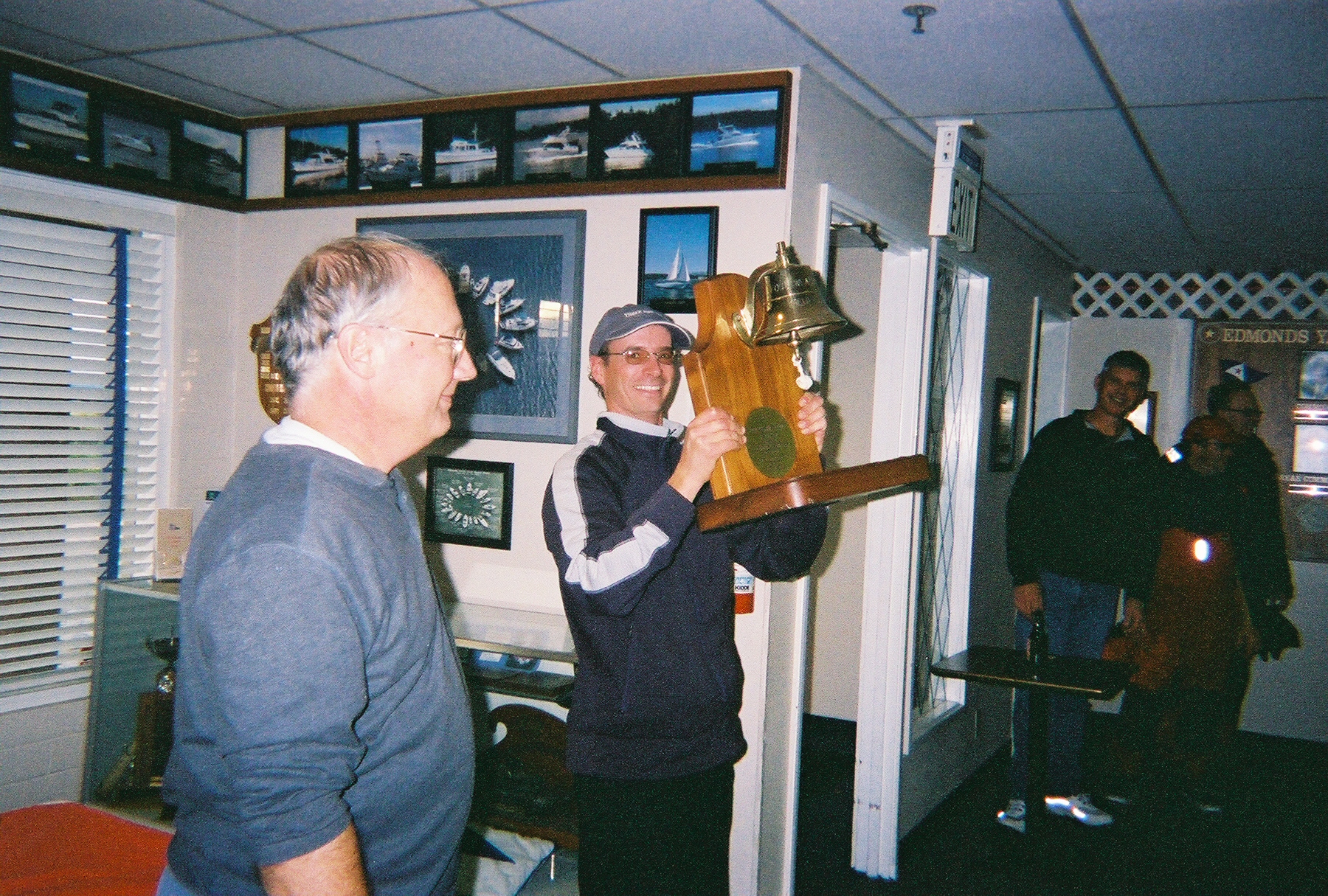 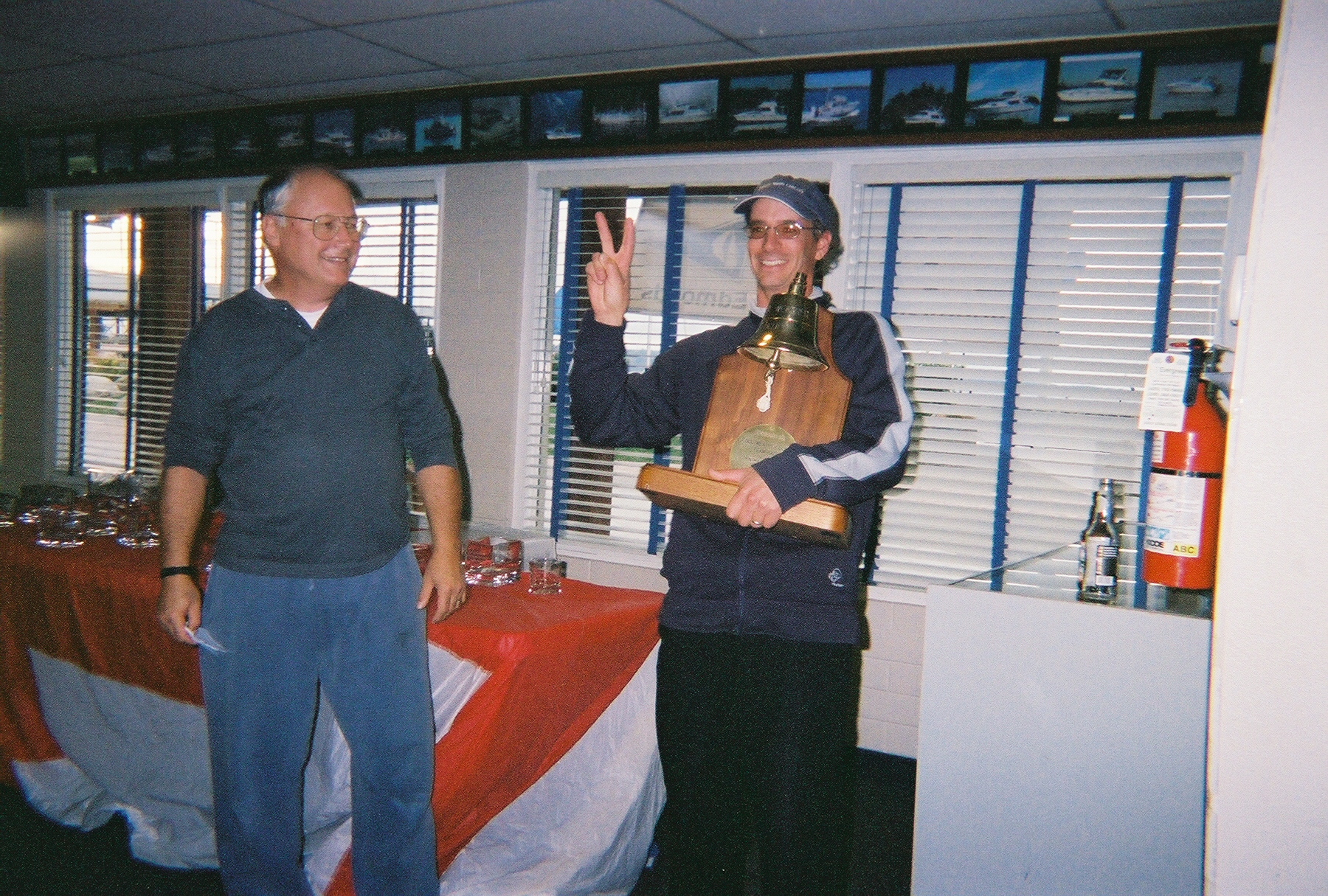 The New PHRF protocol is Dead!!! The New PHRF protocol is Dead!!!The directors and handicappers of PHRF-NW have voted to immediately cease implementation of the "new" protocol. See www.phrf-nw.orgSloop Tavern Boats in 48 North's Top 25 Boats of 2006 7th Bill Stange's Tuesday 24th Ken Chin's Kowloon STYC at the Moore 24 Nationals |